
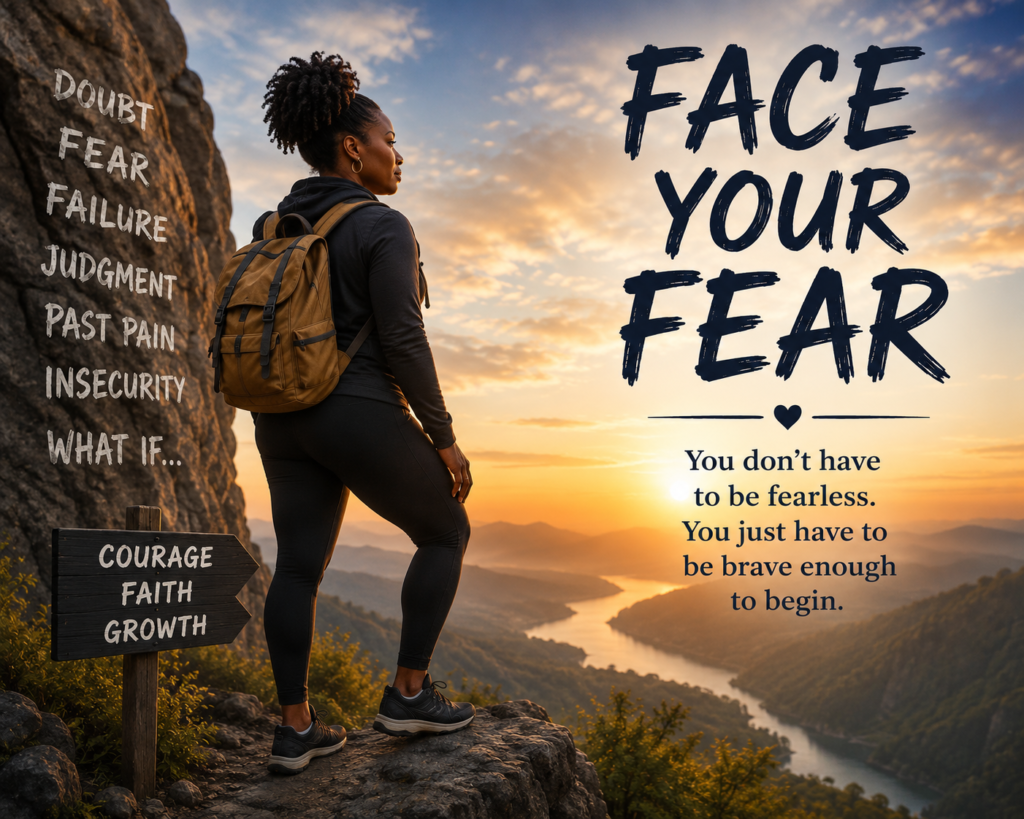
“So do not fear, for I am with you; do not be dismayed, for I am your God. I will strengthen you and help you; I will uphold you with my righteous right hand.” Isaiah 41:10
Fear has a way of making us feel stuck, even when our heart is telling us there is more ahead for us. I have learned that many of the things we fear are not always signs to stop—they are often signs that we are standing at the edge of growth, healing, or transition. Some fears come from disappointment, betrayal, failure, uncertainty, or even past seasons where we gave our best and still got hurt. Over time, those experiences can quietly shape how boldly we move forward.
But one thing life has taught me is this: avoiding fear rarely brings peace. Facing it, little by little, is what builds confidence, wisdom, and resilience.
Recently, I decided to take swimming lessons at the local YMCA. I grew up in the country, where swimming lessons were not readily available, so I never learned how to swim. After retirement, I promised myself that I would begin doing some of the things I never had the opportunity to do earlier in life—and learning to swim was one of them.
I often take my grandchildren to the pool, but for years, I would either sit on the sidelines or simply put my feet in the water, afraid to let my face—or even my hair—go under. Recently, I decided to take the plunge and face that fear. I have to say, it has been a very liberating experience. I can now put my face underwater and even back float. I have decided to continue my lessons so swimming can become another form of exercise and wellness in this season of my life.
In an article titled “Facing Your Fears,” Noelle McWard from Psychology Today offers several practical steps for managing fear and anxiety:
- Notice your anxiety. Understanding how anxiety shows up for you helps you recognize it and respond more intentionally.
- Focus on the facts, not the stories. When facing something unfamiliar, the mind naturally searches for danger and begins creating worst-case scenarios. Learn to separate facts from fearful assumptions.
- Step into your fear. We overcome fear by gradually exposing ourselves to it rather than continually avoiding it.
- Breathe. Slow, deep breathing calms the nervous system and reminds the brain that you are safe.
- Observe your thoughts and feelings without attaching to them. Remind yourself, “This is anxiety” or “That is just a fearful thought.” You can acknowledge feelings without allowing them to control you.
- Thank your anxiety. Anxiety is often trying to protect you, even if it is overreacting.
- Focus more on the goal than the fear. Fear focuses on safety, but growth requires us to focus on purpose, values, and possibility.
- Be kind to yourself. Fear and anxiety can feel overwhelming. Practice patience and compassion with yourself as you move through the process.
Fear often grows in avoidance but weakens through safe, gradual experiences. There is no shame in having fears connected to water—or anything else. Many confident swimmers once had deep anxiety about submerging their heads underwater.
Whatever your fear may be, be patient with yourself. Growth rarely happens through pressure. More often, it happens through trust, repetition, courage, and the quiet realization that you are far more capable than fear has led you to believe.
Wow! I had a fear of water so took classes so I could be relaxed in my water exercise. Yeah I am relax but still cannot swim. Yes be kind to yourself and have patience. Good read.
I also have a fear of water. I have been thinking about lessons. Thank you for this blog.