
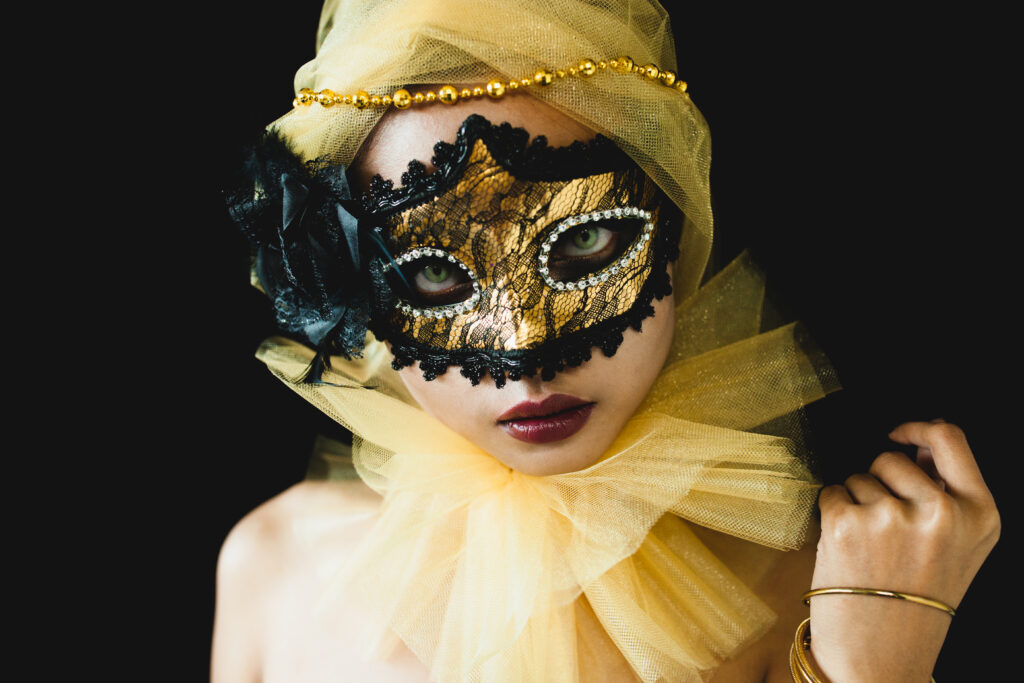
“Sometimes it’s not the people who change; it’s the mask that falls off.” ~Haruki Murakami
The poem, “We Wear the Mask” by Paul Laurence Dunbar uses the metaphor of a mask to represent the act of hiding one’s true feelings and suffering, particularly in the face of social or racial oppression. The poem explores the idea that individuals, especially those marginalized, often present a facade of happiness or normalcy to the world while concealing their pain and vulnerability. (OpenAI, 2025)
In 2020, the majority of us wore masks to slow the spread of the Coronavirus. But truthfully, many of us had been wearing masks long before the virus ever reared its dreadful head—just not the kind you could see.
Years ago, I wore one every single day. Not to hide my physical appearance, but to conceal the emotional pain and insecurities I carried deep within. Behind the smile and the polished exterior were feelings of alienation, rejection, and the constant fear that I wasn’t good enough. I masked my private struggle with a cheerful demeanor, careful grooming, and a relentless pursuit of perfection. I could light up a room while silently battling a storm of inadequacy in my spirit.
So many of us wear these invisible masks to hide our inner wounds—feelings of insecurity, depression, guilt, unforgiveness, and loneliness. We camouflage them through outward behaviors: overachieving, controlling tendencies, people pleasing, anger, disordered eating, compulsive shopping, overworking, or even addiction. These behaviors often stem from unresolved trauma—perhaps a painful childhood, broken relationships, domestic abuse, the death of a loved one, or growing up without the presence of a parent.
Several years ago, during a counseling session, my therapist asked a question that shifted the course of my life: “Who are you?” I answered, “I am a wife and a mother.” He asked again, “Without your family, who are you?” I had no response. At that moment, I realized I didn’t know who I was or why God created me.
That day, I made a conscious decision to confront my feelings of inadequacy and seek healing at the root. It required difficult changes—ending some relationships, distancing myself from others, and embracing a path of self-discovery. Since then, I’ve been on a purposeful journey to uncover my identity and calling.
Today, as a certified professional life coach, I am committed to helping others move beyond the same struggles I once faced. My past pain has become the foundation of my purpose. And now, helping others makes every step of that journey worthwhile.
Let’s begin to remove the mask, heal from our past, and lead an amazing, productive life according to God’s purpose and plan for you. I leave you with the words of Paul Laurence Dunbar:
We wear the mask that grins and lies; it hides our cheeks and shades our eyes.
This debt we pay to human guile;
With torn and bleeding hearts we smile, and mouth with myriad subtleties.
Why should the world be over-wise in counting all your tears and sighs?
Nay, let them only see us, while we wear the mask.
We smile, but O great Christ, our cries to thee from tortured souls arise.
We sing, but oh the clay is vile beneath your feet, and long the mile;
But let the world dream otherwise,
We wear the mask!
WOW!! Thanks
good read as always